Fund tax compliance has become one of the most operationally demanding responsibilities inside alternative investment firms. Larger LP bases, multi-tiered fund structures, expanding state nexus exposure, and investor due diligence expectations have stretched traditional tax workflows past their original design.
For many funds, the process still depends on manual data extraction, spreadsheet-heavy allocation work, and compressed CPA review cycles. That model may survive at low volume, but it starts to fracture when a fund has hundreds of LPs, feeder vehicles, foreign investors, state-level requirements, and prior-year positions that must reconcile cleanly.
AI-enabled fund tax automation changes the operating model. It does not remove professional judgment from the process. Instead, it moves repetitive, high-volume, rules-based work into structured systems so CPAs can focus on review, exception resolution, and client-facing analysis.
The strongest tax workflows are not fully manual or fully automated. They combine machine-scale processing with human accountability.
Why Fund Tax Automation Matters Now
K-1 and Form 1065 preparation sits downstream of many dependencies: final books, audited statements, capital account data, allocation schedules, portfolio company reporting, and investor classifications. When any upstream input arrives late or inconsistently formatted, the tax team absorbs the pressure.
The challenge is not only speed. Accuracy, control, and defensibility matter just as much. Institutional LPs increasingly expect tax packages to arrive on time, match prior-year assumptions where appropriate, and come with clear answers when questions arise.
- LP populations are larger and more diverse.
- Fund structures often include parallel funds, blockers, SPVs, co-investments, and feeders.
- State and multi-jurisdiction filing requirements continue to expand.
- Investor tax teams are reviewing K-1 data with more scrutiny.
- Manual workflows leave limited time for analysis before deadlines arrive.
Where AI Fits in the Tax Workflow
AI is most useful where tax teams face repeatable, high-volume tasks that require consistency and fast exception detection. In a fund tax workflow, that includes source document intake, data extraction, classification support, reconciliation checks, variance flagging, and workflow routing.
The important design choice is control. AI should help identify what needs attention, not silently pass material differences downstream. A well-designed process gives reviewers visibility into the source data, computation logic, prior-year comparisons, and unresolved exceptions before anything reaches investors or tax authorities.
AI-Enabled Fund Tax Workflow
- Source Data Intake — Trial balances, capital accounts, allocation schedules, and investor records are ingested into a structured workflow.
- Validation and Mapping — AI-assisted checks flag missing fields, inconsistent formats, unusual values, and LP profile mismatches.
- Allocation Computation — Income, gain, loss, deduction, and credit items are computed against fund-specific allocation logic.
- Exception Review — Material variances, state filing issues, and classification questions are routed to CPA reviewers.
- CPA Sign-Off — Licensed professionals review the output, resolve open items, and approve final tax packages.
- Secure Delivery — Final K-1s, K-3s, and supporting schedules are distributed with delivery tracking and audit history.
What Better Fund Tax Operations Look Like
When automation is implemented properly, the tax process becomes more predictable. Teams spend less time hunting for source data and more time resolving the items that require judgment. Reviewers see exceptions earlier. Fund managers get cleaner status visibility. Investors receive tax packages with fewer surprises.
Operational Metrics
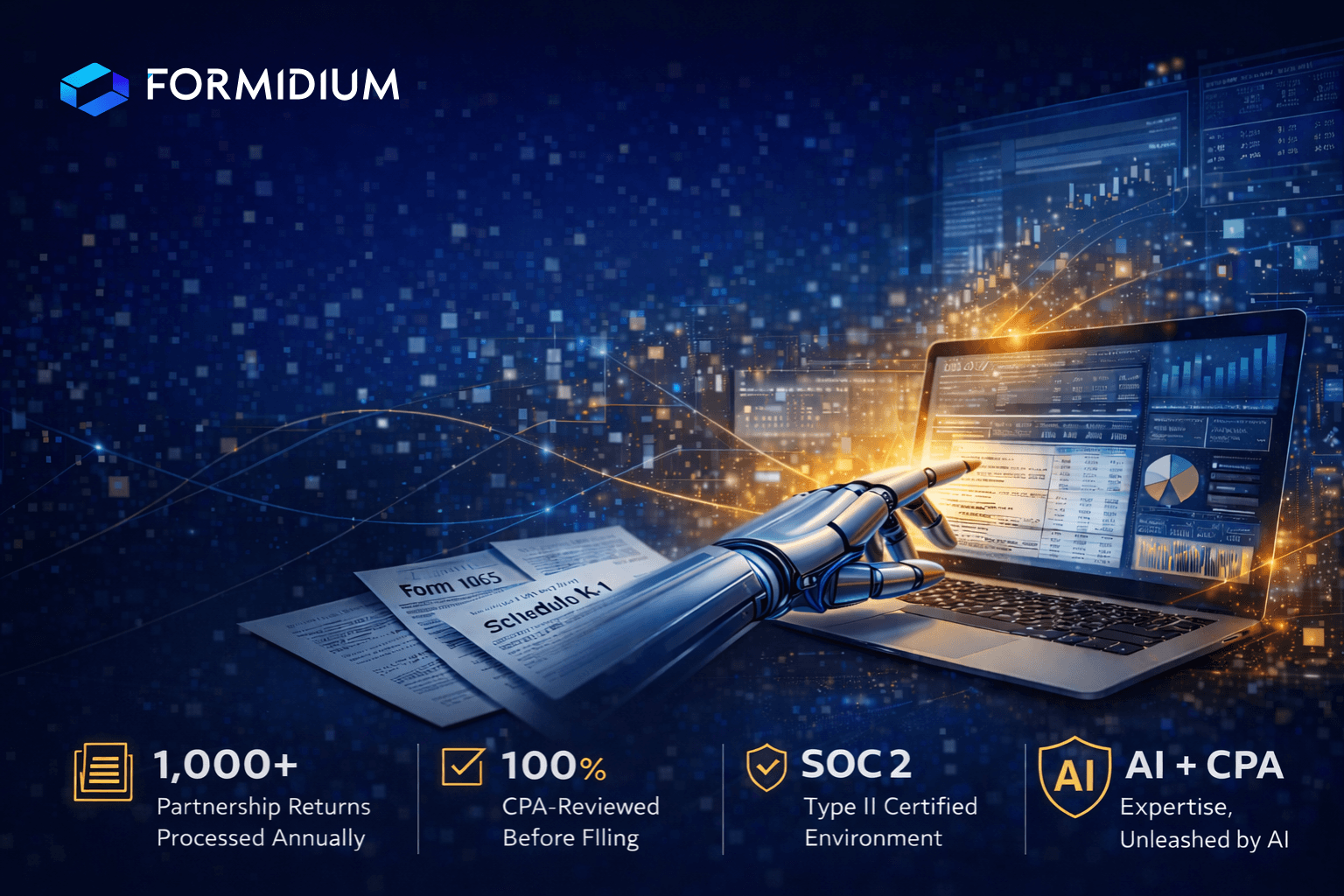
- 1,000+ — Partnership Returns Processed Annually
- 100% — CPA-Reviewed Output
- SOC 2 — Type II Certified Controls
The measurable gain is operational leverage. A fund tax team can support more entities, more LPs, and more complex filing scenarios without adding the same level of manual review burden at every step.
The qualitative gain is confidence. When an investor asks why a number changed, the team can trace the source, allocation logic, review note, and approval history. That audit trail turns tax season from a scramble into a controlled process.
Why Human Judgment Still Matters
Tax automation is not a replacement for CPA expertise. Partnership tax is full of context: fund agreements, side letters, state filing positions, transfers, foreign investors, blockers, reclasses, and prior-year elections. These decisions require professional interpretation and accountability.
The right model uses AI to surface issues earlier and reduce repetitive processing. CPAs remain responsible for reviewing material items, validating assumptions, and approving the final output. That balance is what makes automation useful for institutional-grade fund operations.
Modernize Tax Season
Modernize tax season before deadlines compress the work. AI-enabled fund tax automation can help investment firms deliver faster K-1s, cleaner Form 1065 workflows, and stronger investor confidence without giving up CPA oversight.
Schedule a tax readiness discussion: Get in Touch
Talk to our team: Get in Touch