The Question Fund Managers Should Be Asking About Their Fund Administrator
February 1, 2026

A fund manager once said, almost casually:
"Everyone says they're using AI now. I assume that's just table stakes."
It's an understandable reaction — and a risky one.
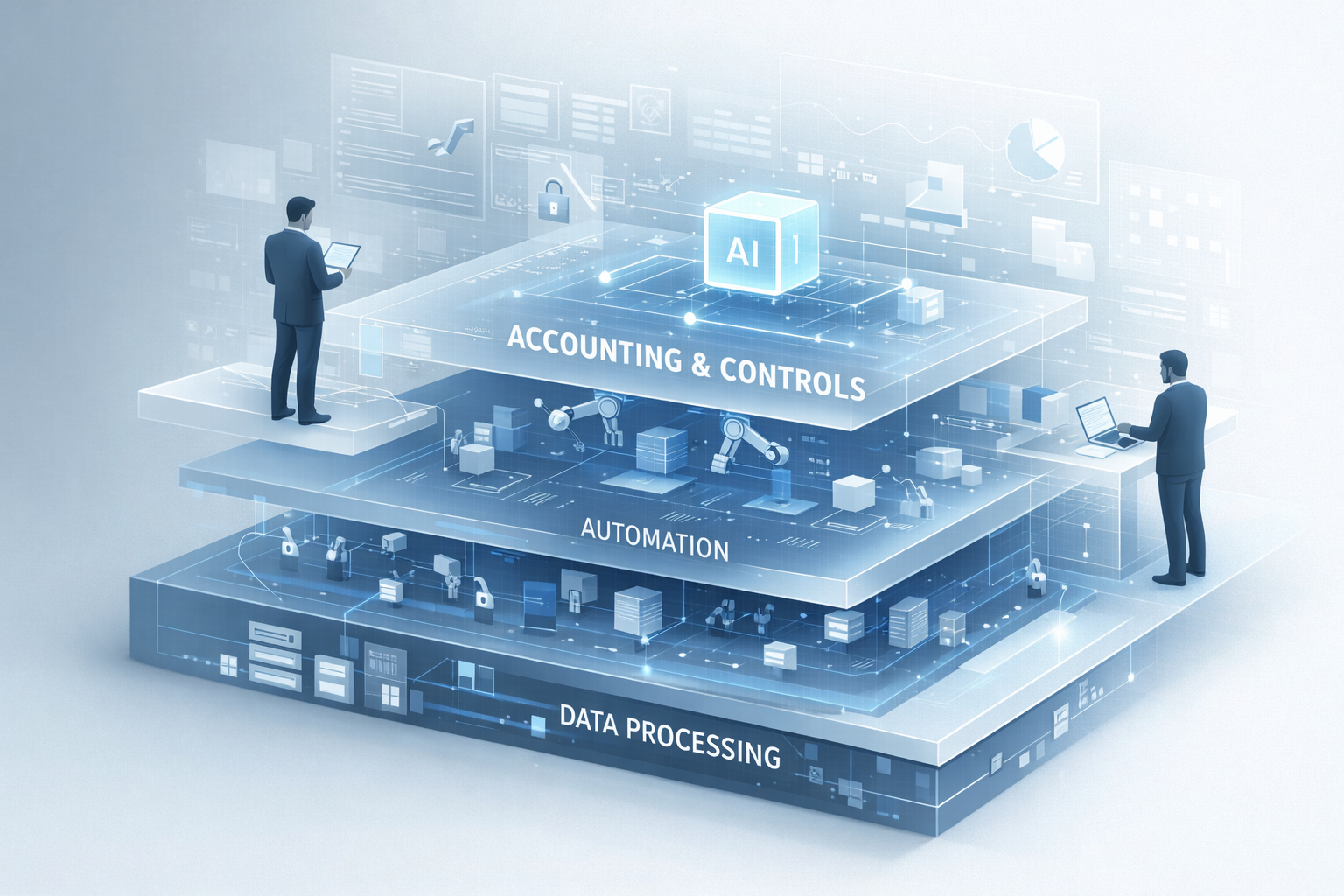
Because when every fund administrator sounds the same, the real differentiator isn't whether they claim to use AI or technology. It's whether they understand what modern, technology-enabled fund accounting actually requires — what they truly control, and where real constraints still exist.
So instead of asking "Do you use AI?", here are the questions that actually separate thoughtful administrators from the rest.
1. Do you own your accounting technology — or rent it?
This isn't about buzzwords. It's about leverage.
Strong administrators can clearly explain:
- What they control versus what they rent
- Where vendor systems create real constraints
- What ownership enables over time
If the answer is "it doesn't really matter," that's usually a sign they haven't thought deeply about technology at the accounting layer.
2. Where should advanced technology actually live in fund administration?
Good answers point to technology living inside the accounting and controls layer, not just around portals or documents.
If an administrator can't articulate where technology belongs, they probably won't build it in the right place.
3. Is technology central to how the firm operates — or just a support function?
This question reveals more than any product demo.
It's not about having a massive tech team. It's about whether:
- Engineers and accountants work side by side
- Technology meaningfully changes workflows
- Problems are solved once in code, not repeatedly with people
Big teams don't equal leverage. Good design does.
4. What's actually hard to automate — and what isn't?
Serious administrators acknowledge:
- Judgment-heavy work
- Messy or inconsistent data
- The gap between documents and real accounting logic
If everything sounds "easy" or "already solved," skepticism is healthy.
5. How should technology change the role of accountants over time?
The strongest answers talk about:
- Less data entry
- More oversight and judgment
- Accountants supervising systems, not feeding them
Vague answers usually mean there's no real roadmap.
6. What needs to be in place before technology can safely touch the books?
Listen for:
- Clean, normalized data
- A single source of truth
- Auditability and explainability
- Controls before automation
Skipping these steps is a warning sign.
7. How would you know the technology is actually working?
Outcomes matter more than slogans:
- Fewer errors or restatements
- Faster closes
- Lower key-person risk
- Better audit readiness
If the answer is just "efficiency," it's underdeveloped.
8. Over time, how should technology change your cost structure?
A credible roadmap implies:
- Better scalability
- Slower headcount growth
- Lower marginal cost per fund
If costs only ever rise, the math doesn't work.
Where Formidium Fits
At Formidium, we don't pretend that technology has magically solved fund accounting.
Our approach is grounded in a few core beliefs:
- Technology belongs inside the accounting and controls layer
- Ownership matters — especially at the system-of-record level
- Organizational design matters as much as code
- Automation must be explainable, auditable, and governed
- The roadmap matters as much as today's features
We deliberately operate as a technology-led service organization — combining deep operational expertise with owned platforms — because real progress in fund administration requires both.
Final Thought
Don't ask fund administrators whether they "use AI."
Ask whether they understand what building durable, technology-led fund accounting actually takes — technically, operationally, and organizationally.
The administrators that win won't be the loudest.
They'll be the most thoughtful about the path ahead.